
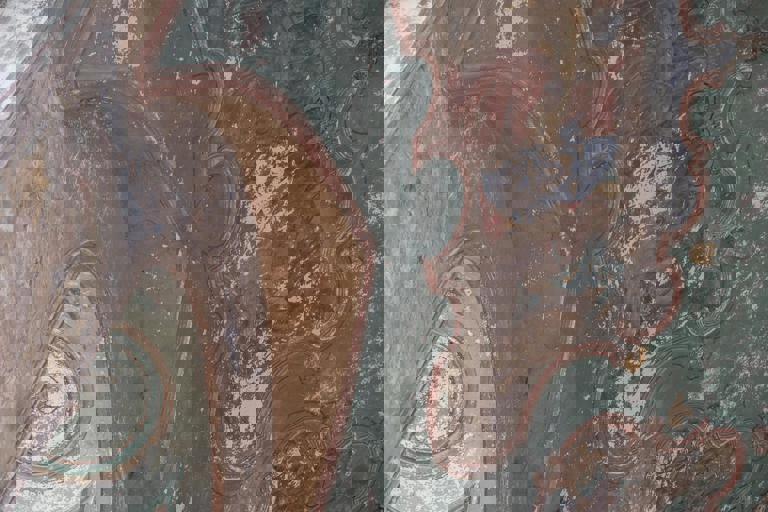
A team of painters working on the refurbishment of a city library made a remarkable discovery this month when they peeled back several layers of wallpaper and plaster to reveal a vibrant Victorian mural. Tucked away behind decades of unsympathetic renovations, the hidden artwork depicts a lively city square bustling with elegantly dressed citizens from the late nineteenth century. The unveiling has sparked considerable excitement among art historians, local officials, and the general public alike.
The scene was first noticed by Stephen Hargreaves, the lead painter, who described the moment as 'like opening a time capsule.' 'We were removing old plasterboard when the corner of something colourful caught my eye,' he explained. 'As we cleared more away, intricate images of carriages, shopfronts, and even a flower vendor appeared.' What initially seemed to be an ordinary refurbishment soon became a matter of historical significance.
According to Dr. Lillian Greenwood, a historian specialising in Victorian urban art, such murals were commonly commissioned for public buildings but few have survived, especially in such well-preserved condition. 'Most murals from this era were either lost to subsequent building work or faded beyond recognition due to exposure,' she stated. Greenwood emphasised that this finding is exceptionally rare and valuable for researchers.
The mural stretches across an entire wall measuring nearly six metres in length and almost three metres in height. Experts estimate it dates from the 1880s, a period marked by great civic pride and a flourishing of public art projects funded by local benefactors. The artwork's vibrant colours, despite being hidden for well over a century, suggest that high-quality paints and painstaking techniques were employed by its creators.
Library staff have responded to the discovery with both surprise and enthusiasm. Janice Morgan, the library’s head librarian for over twenty years, said, 'We had always heard rumours of something special lingering behind the old walls, but to see this level of artistry is truly breathtaking. It connects our modern-day library to the city's rich history in ways we never expected.' She is confident that the mural will become a new focal point for community engagement.
Plans are already underway to conserve and restore the mural so that it can be properly displayed. The city council’s culture committee has set up an emergency fund to begin preservation, and officials have consulted with leading conservationists to ensure algorithms are not used for digital touch-ups, but that authentic materials and methods are prioritised. Early restoration assessments estimate the process could take up to a year.
The mural’s discovery also presents an educational opportunity for local schools and universities. Art teachers, such as Harriet Ives from City College, see the restoration as a chance for students to learn about the Victorian era, mural techniques, and heritage conservation. 'There’s nothing quite like seeing history brought to life before your eyes,' Ives remarked, noting the project could inspire future generations of artists and conservators.
Public interest in the mural has surged since news broke, with the library’s social media accounts inundated by messages from residents eager to catch a glimpse. Although the room housing the mural is currently off-limits due to safety concerns, the library’s website features high-resolution photographs and plans for virtual tours during the restoration process. These initiatives aim to make the treasure accessible even before it is fully revealed in person.
For the city’s wider artistic community, the mural revives interest in the legacy of Victorian public art. Local curator Tom Elliott believes its discovery could prompt similar investigations in other historic buildings. 'We tend to forget that the Victorian era was teeming with creativity and ambition. This mural demonstrates just how much more there is to uncover in our built environment,' Elliott asserted.
City officials hope the mural might also boost the local economy by attracting visitors when the project is completed. Heritage tourism has proven lucrative in other UK cities following comparable discoveries, such as the restoration of the Manchester Town Hall murals. The council is considering guided tours, merchandise, and educational workshops to ensure the mural contributes to both cultural enrichment and economic development.
Scholars have already begun studying the scene depicted in the mural, uncovering subtle clues about the city’s social fabric during the Victorian era. Elements such as fashion details, signage, and architecture offer insights into daily life, class structure, and civic values. Dr. Greenwood and her colleagues plan to publish their findings in a forthcoming issue of the Journal of British Urban History, underscoring the mural’s research value.
Ultimately, the accidental discovery of the forgotten mural during routine library renovations is a testament to the layers of history embedded in urban spaces. As conservation gets underway and anticipation builds, the project has already begun revitalising community interest in the city’s artistic and architectural past. If nothing else, the mural serves as an evocative reminder that even the most familiar buildings may still harbour secrets waiting to be revealed.